
Tech Made Simple
Your ultimate guide to technology reviews and buying guides.
Trusted by thousands worldwide
★★★★★
We independently review everything we recommend. When you buy through our links, we may earn a commission. Learn more
The Best Tech for 2025!
Samsung Smart Glasses Could be Rolling Out in 2025
In November this year, a Korean newspaper reported on a leak that Samsung is apparently planning an “initial run” of intelligent glasses consisting of around 500,000 units—set to be released in the third quarter of 2025 (between July and September). That release date makes sense, as it lines up with Samsung’s “Unpacked” event, which typically launches next-generation products like the new smartphones and Galaxy Ring announced this year. However, it’s worth noting that this release date isn’t necessarily set in stone. Samsung’s TM Roh also said the company was considering releasing an XR device in 2024, which obviously hasn’t happened. Still, everything seems promising – at least for now.
The Samsung Smart Glasses: AR or Just AI?
So, will these glasses be true augmented reality wearables? Or are they just going to give you access to a hands-free smart assistant, like the Meta Ray-Bans. For now, we’re not really sure. Based on leaks, we do know that the glasses will use a Qualcomm chip – no surprise there. Right now, they seem to feature an AR1 chip.
However, Qualcomm has released its AR2 chipset, so there’s a chance the specs could see an update before they’re officially launched next year. We also know that the glasses will apparently feature a 155mAh battery and a 12MP Sony camera built-in. If these specs sound familiar, it’s because they’re almost exactly what you’ll get from the Meta Ray-Ban glasses, too.
Unfortunately, most of the leaks don’t mention any kind of display for augmented reality experiences, and the rumored weight of the glasses (about 50g) doesn’t leave much space for an actual display. However, that doesn’t necessarily mean that Samsung won’t include augmented reality in its specs.
The patent leak from October directly references augmented reality technology. It suggests that users can interact with AR content by connecting to another device (like a smartphone). Plus, it’s worth noting that Samsung’s glasses, while lightweight, do seem to be a little heavier than the Ray-Ban specs – so there may be hope for AR yet.
The AI Technology: Google Gemini
Even if Samsung doesn’t add augmented reality to these glasses, they won’t give users the exact same experience as they’d get from the Meta Ray-Bans. That’s because Samsung’s glasses will feature a very different smart assistant—a custom version of Google’s Gemini LLM.
The built-in Gemini assistant could make Samsung’s glasses more appealing for a broader range of use cases. While Meta’s AI assistant is handy, it focuses primarily on supporting content creators. Leaks around the Samsung glasses suggest the assistant can handle tasks like payment with QR code recognition.
Plus, you may be able to interact with content and control your assistant using “gestures” rather than just your voice. Meta’s glasses don’t offer this yet, although the company has teased upcoming live translation features.
What Can We Expect from the Samsung Smart Glasses
Even if Samsung releases its smart glasses next year, as the rumors suggest, it’s difficult to know what these glasses will bring to the technology market. We can confidently assume they’ll have a high-quality Qualcomm chipset and feature Google’s cutting-edge Gemini AI.
Beyond that, we’re left to speculate. Based on the leaks, Samsung seems committed to making these glasses very lightweight. They’ll certainly want to ensure their specs are ideal for all-day wear, like the Meta Ray-Ban specs. However, the glasses could end up being a little heavier than expected if Samsung chooses to integrate displays for augmented reality.
Adding AR to the mix, even if it means ending up with a bulkier pair of glasses, would be a good move for Samsung. It’d allow them to differentiate themselves from Meta, and start making an impact in the XR space.
If Samsung does implement displays, I can’t imagine them choosing anything less than a 4K resolution. A basic pair of “HD” displays wouldn’t look good for a company known for creating high-quality smartphones and televisions.
Samsung’s key to success will be figuring out how to integrate quality displays into the mix without compromising on user comfort. I also think they’ll need to focus on making these glasses truly “wireless” to gain an edge in the market. After all, many competing smart specs still don’t have an integrated battery, meaning you need to keep them connected to a phone or laptop at all times.
Leaks suggesting the specs will include an integrated battery is good news, as it should mean the glasses will be able to power themselves.
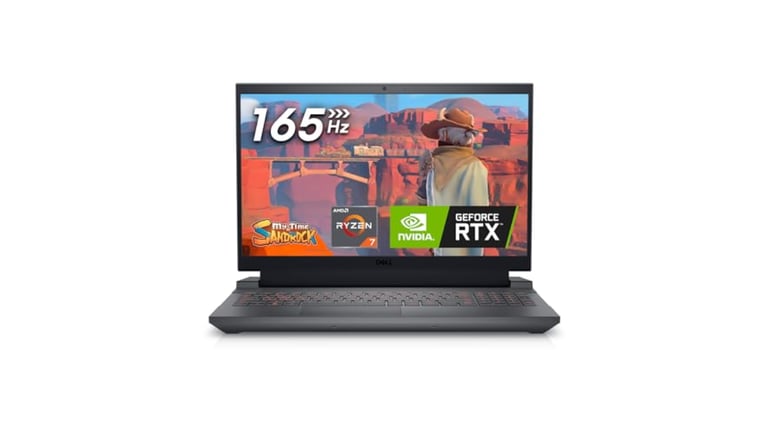
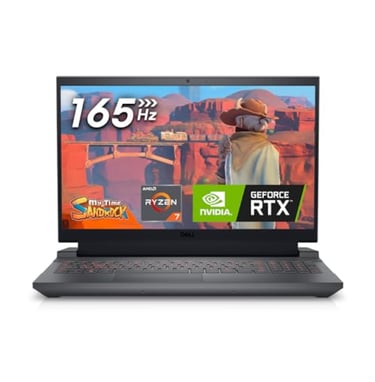
Dell's G5 series has been a favorite of ours since its debut, and it continues to stand out as the best budget gaming laptop that delivers an excellent gaming experience. Now rebranded as the G15, it starts at under $1,000. While it’s not the most powerful gaming laptop on the market, it packs modern hardware, including Intel’s 13th-generation CPUs and NVIDIA’s RTX 40-series GPUs (with some models also offering AMD Ryzen processors).
This budget-friendly laptop is on the heavier side at over five pounds, but it’s a reliable and well-built choice. You can even elevate its performance to mid-range gaming standards by opting for the RTX 4060 configuration. For its price, the G15 offers impressive value. Plus, it features a 720p webcam, making it ideal for chatting with friends while gaming


The Brain for Your Smart Home?
Offline Smart Home Assistants
The beauty of the ASUS ROG Zephryus G14 is that it features an all-new unibody aluminum chassis, a vibrant 120Hz OLED display, solid performance and tons of ports–all for hundreds less than an equivalent Razer Blade 14. It even has a built-in microSD card reader and presets for several color gamuts, so it can easily pull double duty as a photo/video editing machine. Its audio is also way above average thanks to punchy up-firing stereo speakers. Battery life is solid too, with the Zepyrus lasting just shy of eight hours on our rundown test. And to top it off, the G14 weighs almost half a pound less than rival laptops with similar designs. The main downsides are that its GPU caps out at an RTX 4070 (instead of a 4080 like on the previous model) and that its RAM is soldered in. But if you want a really great all-rounder that offers big power in a portable package, this system has to be at the top of your list.
Essential Tech Picks for 2025
Nothing Phone (3) will excel where no Samsung, Google or Apple has impressed
The Nothing Phone (3) is expected to launch sometime next year, and there's plenty of excitement surrounding it—not just because it's the next flagship release from Nothing, but also due to the innovative approach the company is taking in its design. Founder Carl Pei recently shared a fascinating video that sheds light on Nothing’s philosophy for its newest phone. If executed well, the company could succeed where many others have struggled to make an impact.
What Makes Nothing Phones Stand Out
Nothing phones are best known for their Glyph interface, which aims to reduce the need for frequent phone interaction. This elegant system, combined with a sleek and minimalistic UI, appeals to users looking to break free from the habit of endlessly checking apps. With the Nothing Phone (2), the Glyph interface evolved significantly, offering extensive customization options. Users could program the LED lights on the phone’s back to flash in unique patterns for different types of notifications. This feature allowed people to prioritize notifications without needing to glance at their screens constantly. And when the screen was on, the monochrome and beautifully simple UI discouraged unnecessary tapping by avoiding the lure of brightly colored app icons.
Introducing a Revolutionary AI Assistant
The most intriguing part of Carl Pei's recent reveal, however, centers on the AI assistant that Nothing is developing for the Phone (3). Unlike existing smartphone AI systems—such as Galaxy AI, Gemini, or Apple Intelligence—which have received mixed reviews, Nothing’s vision seems poised to redefine the concept entirely. The assistant appears as a conversational, personable entity that avoids the robotic demeanor typical of many AI models. It even assigns itself a name, which you can change if desired, and represents itself visually through a pair of simple, animated eyes. This "face" appears across menus, creating a sense of constant presence and accessibility. Communication with the assistant is straightforward: you tap and hold the screen while speaking, minimizing interruptions between the user and the AI. This seamless interaction reflects Nothing’s commitment to intuitive design.
A New Role for AI in Smartphones
Perhaps the most groundbreaking aspect of Nothing’s AI is its potential to eliminate the need for traditional apps. Instead of relying on individual app installations, the AI would serve as a personalized intermediary, pulling relevant information and services directly from platforms. This approach aims to prioritize essential information while relegating everything else to the background. Over time, the assistant could evolve into a unique "individual" that learns your habits, preferences, and needs. Its goal would be to handle tasks in a way that minimizes phone usage, offering a streamlined and distraction-free experience.
The Future of Minimalist Smartphones
With the Nothing Phone (3), the company seems poised to push the boundaries of smartphone design, combining its signature Glyph interface with a next-generation AI assistant. If Nothing delivers on this vision, it could set a new standard for minimalism and functionality in the smartphone industry, giving users an innovative way to stay connected without being tethered to their devices.

Xbox Adaptive Joystick
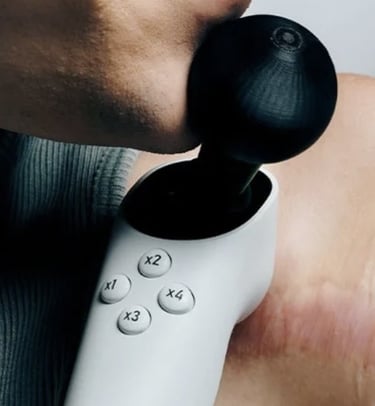
For years, Microsoft has been dedicated to making its products more accessible to users with disabilities. This initiative started with the Xbox Adaptive Controller, a groundbreaking device designed to be programmable and customizable for functions that standard controllers couldn’t support. Building on this foundation, Microsoft later introduced a range of adaptive PC accessories inspired by the same design philosophy.
Now, Microsoft is taking accessibility a step further with the release of the Xbox Adaptive Joystick. Designed as a companion to other Xbox controllers, this joystick enhances accessibility by providing more options for users. It connects seamlessly to any Xbox console or PC, allowing users to map its buttons for a variety of actions. Its compact design makes it easy to operate using different body parts, ensuring versatility and ease of use.
To further empower users, Microsoft is offering downloadable files so they can 3D print and share custom thumbsticks for the Xbox Adaptive Joystick, adding an extra layer of personalization to meet individual needs.
Insights
Your guide to informed tech purchasing decisions.
© 2024. All rights reserved.